NEW NORDIC

New Nordic is an exhibition currently running at the Louisiana Museum of Modern Art, located in a little coastal town called Humlebæk just north of the capital area of Copenhagen. The museum is well known for its rich exhibitions within modern art, and during the recent years architecture as well. The New Nordic exhibition focuses on Scandinavian architecture, and attempts to define modern nordic architecture through a display of noteable Scandinavian architectural projects, small-scale installations, as well as narratives and discussions from Scandinavian artists, writers and other cultural persons.


With the introduction to our new exchange students, the idea was to explore Scandinavian architecture through both the perspective of our new foreign students, as well as challenging the views and oppinions of the locals. The discussions that played out as a result of the exhibition were indeed quite interesting. The vast majority seemed to agree, that choice of material and relation to nature seemed to be key aspects in Scandinavian design. I fully agree to this, but the interesting thing is that this conclusion is more relevant to the more northern Scandinavian countries, such as Norway, Sweden and Finland. In this case, Denmark has less in common with material choice, where brick and stone are the dominating materials rather than wood, which isn't as efficient a building material due to the Danish climate. Also, building in relation to nature is more relevant in countries such as Sweden and Norway, where especially the latter is rich on mountainious landscapes. 


Furthermore, the discussion expanded towards the contemporary large-scale projects, where Scandinavian welfare politics seemed more relevant than material choice and relation to landscape. It is in this theme of the New Nordic exhibition where Danish architecture makes its place in the contemporary Scandinavian architectural design. While lacking the climates and nature that characterize the other nordic countries, Denmark has embarked in an era where democratic design leads the future. Unlike rapid housing developments of the mid-20th century and the housing boom of the beginning of the 21st century, the architectural process today is rich on public hearings, municipality regulations as well as media coverage. This way of design is of course not solely the work of Danish architecture, but has become almost a must in Scandinavian architecture. There is a common expectation of new large-scale projects, that they contribute to the public and the local life as much as they contribute to the private owner of the building(s). Two examples of such design are Snøhetta's New Norwegian Opera in Oslo, Norway and Lundgaard & Tranberg's SEB Bank HQ in Copenhagen, Denmark. Instead of stealing vast amounts of public space, both these large-scale projects attempt to integrate public life within their private domain, thus giving public space to the citizens, while taking up private space for their needs.
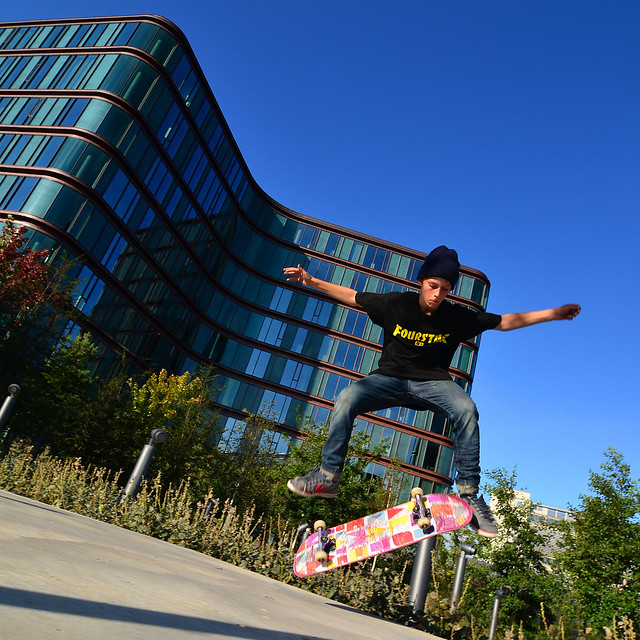

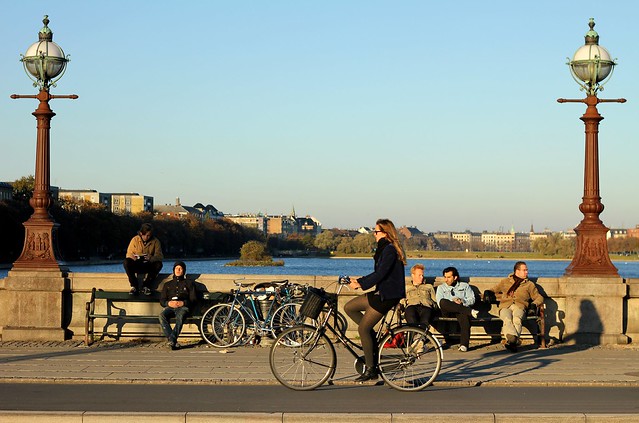
Another part of the exhibition interacted with the idea of giving cities back to the pedestrians rather than motorists. This part of the exhibition was almost directly organized by the Danish city-planner, Jan Gehl, who is currently rather active with his de-motorizing urban strategies. Jan Gehl works in brief with renewing cities through out the world to match the needs of pedestrians and cyclists, rather than prioritizing vehicular traffic. Whether such urban strategies can be generalized as being Nordic is uncertain to me, but they have never-the-less been part of Danish urban-planning for decades. Examples of such planning are the vast amounts of pedestrian streets in Danish cities (most notably perhaps Strøget in Copenhagen) and the great bicycle infrastructure that has been developed in harmony with the existing motorized vehicular infrastructure. 

As you might notice, the subject of New Nordic could be discussed in great lengths and there are perhaps no objective conclusions as to what the exact definition is, due to the personal and subjective nature of the exhibition's theme. Therefore, I shall leave this post at an open end and recommend some reading on the links provided below.

Further reading:

- Andy Minchev

THE SOCIAL CITY

Our 4th semester project consists of a site in a Copenhagen suburb, on which a minor residential area is to be planned. The area of the site is called Hareskov By - a Copenhagen suburb that is located in a large forest area within the borders of Greater Copenhagen (as a matter of fact, the largest forest area within the latter).


Our first step in the project, was to write a program for our vision of the site - How dense should the buildings be? How should the area integrate with its surroundings? Who is going to live there? Due to the lovely natural surroundings of the area, I decided that familys with children (ages ranging from babies to teenagers) should be my primary group for the design of the area. Furthermore, the social life of the residential area was of great priority - This planning was strongly inspired by the theories of the Danish architect, Jan Gehl, who is well known for his urban strategies. With social design in mind, it was also a great priority of mine to integrate the new residential area, with the existing suburban area, in a way that the new and existing citizens can live in harmony, and so the new area contributes to making the existing area better, rather than creating problems or being isolated.


I like to work in areas with contextual surroundings, but on this site, I felt that there was a great lack of such. In order to comprise for the lack of context, I decided to design my houses as abstractions of the surrounding suburban sprawl. With different brick colors and patterns on the exterior, I decided to make my project a sort of village - a city within a city, if you will. Also, in order to make a more interesting and less linear site plan, I distorted the houses so that small spaces a created between the houses, as illustrated below:


Usually I keep writing vast amounts of text explaining the further details of my projects, but due to the great scale of this one, I'll keep it short this time, and let my illustrations speak for themselves.

Ortographics


Renderings


As for the crit of the project, the comments were generally positive. The plan of the residential area (especially the focus on the social structuring and the integration with the existing neighbourhood) received very positive comments. So did the interior planning of the houses (which I haven't been too detailed about in this post). As for the negative commentary, the professors were in doubt about whether the placement of my windows in the houses were right, and also whether the triple differences in both house shapes (there were three different house types) and the three different exterior patterns were a bit too much. All in all, the project received the second highest grade possible, and considering my effort (I often had times in the process where I felt stuck - this especially due to the lack of context in the area), I am all in all satisfied with the result.

That is all for now. With my bachelor year beginning tomorrow, there will be lots more to write about here in the blog. As a matter of fact, we're going to an exhibition in Louisiana Museum of Modern Art as soon as Tuesday (4th September), so a new blog update might be expected as soon as that.

- Andy Minchev

RETURN

Once again, it's been quite a while since I last posted something in here. Since my last post (my trip to Amsterdam), I spent the rest of the pre-summer vacation time on working on my semester project. Once the summer vacation started, I've been busier than expected with both everyday stuff and quite simply enjoying the summer as well. I never could get myself to write in the blog due to the latter, but with my bachelor year starting from tomorrow (litterally), it's time to get the good old blog running with projects, news and what not. Today I'll make a post about my semester project to sum up last semester's work and thus ready the blog for the upcoming content of the new year. So that's it for this post - The semester project one will be written as soon as I post this!

- Andy Minchev

TRIP TO AMSTERDAM

The first time I was in Amsterdam, was around the year 2002. At that time, I was only about 12 years old, and have a very limited memory of my experience in Amsterdam and Holland. What little memory I have left of that trip, is that I found Amsterdam to be a rather pleasant city. This nostalgic memory paved the path for my Amsterdam trip this year.


Before I proceed, it is perhaps important to mention that before leaving for Holland, I decided not to do some research on what to see, and what not to see (like I often do), and instead embrace and explore the city more spontaneously. This meant that I didn't go on targeted hunts for modern architectural buildings, but rather wandered around the city streets, seeing whatever would come in my way. 


Already on the first day (out of just three), I noticed that Amsterdam has a lot in common with Copenhagen. The bike culture in Amsterdam is very similiar to the one in Copenhagen - not infrastructurally superior, but nevertheless quite efficient it seemed. The old city area is placed in a similar manner to that of Copenhagen, but of a rather greater size. Both cities furthermore have old industrial harbours, which are both currently in the process of being rebuilt to new, modern service and commercial venues. And last but not least, both Denmark and Holland have a rather low topology, which in the case of the two cities, seems to create a similar local weather. One of the greatest differences between the two cities on the other hand, is the vast amount of tourists in Amsterdam. The city's population may be slightly smaller than that of Copenhagen, but with Amsterdam being an extremely popular tourist destination, the tourist population is remarkable. The vast tourism in the city has boosted a bustling café and nightlife (especially in the Red Light District illustrated on the picture below), that brings a dynamic to the city, that Copenhagen quite simply can't compete with.


No matter where you go, and how small the streets you wander, there are people practically everywhere. Tourists taking snapshots of the charming, tilted historic buildings. Local cyclists rushing through the narrow canal streets. Small cafés hidden even the tiniest of passages as illustrated below. Amsterdam is full of life.


The city itself is nothing short of an international example - a statement if you will - as to how much life a city can attract, thanks to pedestrian and cyclist planning. The plentiful canals that characterize the city furthermore create an unrivaled charming atmosphere (except for Venice I can imagine - a city which I long to travel to). In short, Amsterdam is an absolute success when it comes to a living city - no doubt about that! Even the old buildings jump  to life, as their old facades lean towards the streets as shown below:


From an architectural point of view, I think that the city as a general experience is really charming and pleasant. On the other hand, one of the things I can't make up my mind on, is the endless rows of the charming in-fill canal houses. Considering the scale of the city rows, the small, narrow houses really make the long row scale more pleasant, but in the long run, I felt that these houses started getting a bit too repetitive. The endless rows of such houses often ended up looking too monotone to the eye in my oppinion, and unlike most pre-neo-classicistic (I may be making up architectural terms now, but I hope you know what I mean!) historic buildings, which often vary in size, color, shape, etc. even when in rows, the Amsterdam houses seemed just to look a bit too much like one another. There are of course the occasional buildings that stand out, such as the one above, or the tiny house below, but the variations are very limited.


I am perhaps being a tad bit too critical right now, so to be honest, the buildings in the oldest town part (around the Red Light District area) do indeed vary quite a lot! Besides the narrow, charming historic streets, Amsterdam (and Holland generally) are well known for their modern architecture. As I mentioned in the beginning, I chose to experience the city first-sight, so I didn't look up any specific architectural buildings and came across rather few of the modern ones around the historic center, where I spent the most of my time. But I did come across one rather interesting little building by the harbour area (shown below). This little gem is actually the Amsterdam architectural center. I really don't have much to say about it, since the building really speaks for itself.


Later, I would come to regret not doing even just a tiny bit of research on the modern architecture of the city, since having seen this interesting little structure, I began to fear I had missed out on a lot of such interesting architectural eye-candies. With that said, I have yet a lot more to explore in Amsterdam, and I'm sure I'll drop by again some day in the near years. All in all, a lovely city, with an absolutely amazing atmosphere, charm and life. I've tried being critical at some of its ways, but I have to be honest about the fact, that I simply adore it!

Further reading:

P.S. The weather was rather unfortunate during my stay, and therefore I apologize for the somewhat grayish appearance of many of my pictures.

- Andy Minchev

AN UPDATE

It's been quite a while since I last updated the blog, and this post is an optimistic step towards more frequent posting. At school, we've been doing some minor projects and workshops, while lately we've begun our big semester project. (more about that in an upcoming post). What should've been the most interesting event during the last few weeks and months, was a studytrip to Japan, but due to diplomatic difficulties, I ended up being the only student in my department who didn't come along! This sad story is more of a personal case, and I shall thus spare you the rather boring bureaucratic details of its nature. Since I never made it to Japan, I went on a short trip to Amsterdam instead, which I will also post about soon. Other than these events, I'm currently working on the before-mentioned semester-project, while also partially working on an idea-competition for a redesign of Copenhagen's City Hall Square. That just about sums up my recent activities, so on to the posts!

- Andy Minchev