
New Nordic is an exhibition currently running at the Louisiana Museum of Modern Art, located in a little coastal town called Humlebæk just north of the capital area of Copenhagen. The museum is well known for its rich exhibitions within modern art, and during the recent years architecture as well. The New Nordic exhibition focuses on Scandinavian architecture, and attempts to define modern nordic architecture through a display of noteable Scandinavian architectural projects, small-scale installations, as well as narratives and discussions from Scandinavian artists, writers and other cultural persons.

With the introduction to our new exchange students, the idea was to explore Scandinavian architecture through both the perspective of our new foreign students, as well as challenging the views and oppinions of the locals. The discussions that played out as a result of the exhibition were indeed quite interesting. The vast majority seemed to agree, that choice of material and relation to nature seemed to be key aspects in Scandinavian design. I fully agree to this, but the interesting thing is that this conclusion is more relevant to the more northern Scandinavian countries, such as Norway, Sweden and Finland. In this case, Denmark has less in common with material choice, where brick and stone are the dominating materials rather than wood, which isn't as efficient a building material due to the Danish climate. Also, building in relation to nature is more relevant in countries such as Sweden and Norway, where especially the latter is rich on mountainious landscapes.

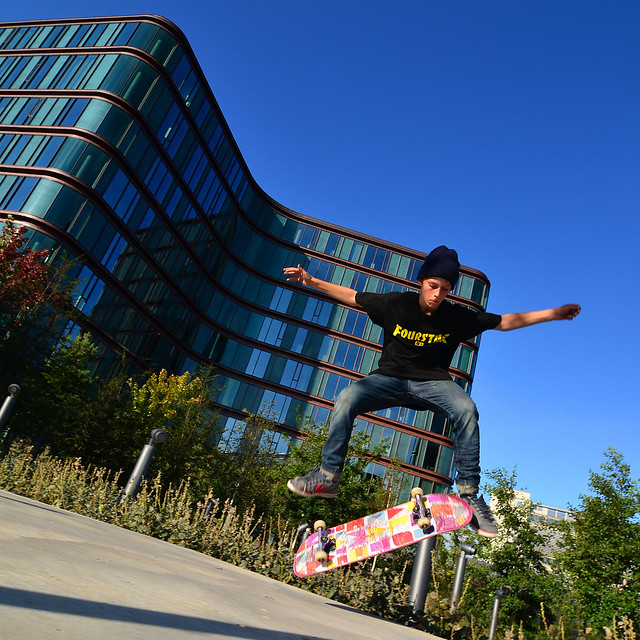
Furthermore, the discussion expanded towards the contemporary large-scale projects, where Scandinavian welfare politics seemed more relevant than material choice and relation to landscape. It is in this theme of the New Nordic exhibition where Danish architecture makes its place in the contemporary Scandinavian architectural design. While lacking the climates and nature that characterize the other nordic countries, Denmark has embarked in an era where democratic design leads the future. Unlike rapid housing developments of the mid-20th century and the housing boom of the beginning of the 21st century, the architectural process today is rich on public hearings, municipality regulations as well as media coverage. This way of design is of course not solely the work of Danish architecture, but has become almost a must in Scandinavian architecture. There is a common expectation of new large-scale projects, that they contribute to the public and the local life as much as they contribute to the private owner of the building(s). Two examples of such design are Snøhetta's New Norwegian Opera in Oslo, Norway and Lundgaard & Tranberg's SEB Bank HQ in Copenhagen, Denmark. Instead of stealing vast amounts of public space, both these large-scale projects attempt to integrate public life within their private domain, thus giving public space to the citizens, while taking up private space for their needs.
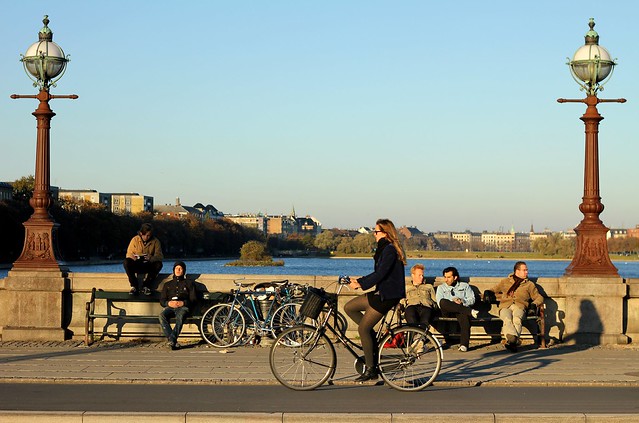
Another part of the exhibition interacted with the idea of giving cities back to the pedestrians rather than motorists. This part of the exhibition was almost directly organized by the Danish city-planner, Jan Gehl, who is currently rather active with his de-motorizing urban strategies. Jan Gehl works in brief with renewing cities through out the world to match the needs of pedestrians and cyclists, rather than prioritizing vehicular traffic. Whether such urban strategies can be generalized as being Nordic is uncertain to me, but they have never-the-less been part of Danish urban-planning for decades. Examples of such planning are the vast amounts of pedestrian streets in Danish cities (most notably perhaps Strøget in Copenhagen) and the great bicycle infrastructure that has been developed in harmony with the existing motorized vehicular infrastructure.
As you might notice, the subject of New Nordic could be discussed in great lengths and there are perhaps no objective conclusions as to what the exact definition is, due to the personal and subjective nature of the exhibition's theme. Therefore, I shall leave this post at an open end and recommend some reading on the links provided below.
Further reading:
- Andy Minchev


